

What is Eucharistic Adoration?
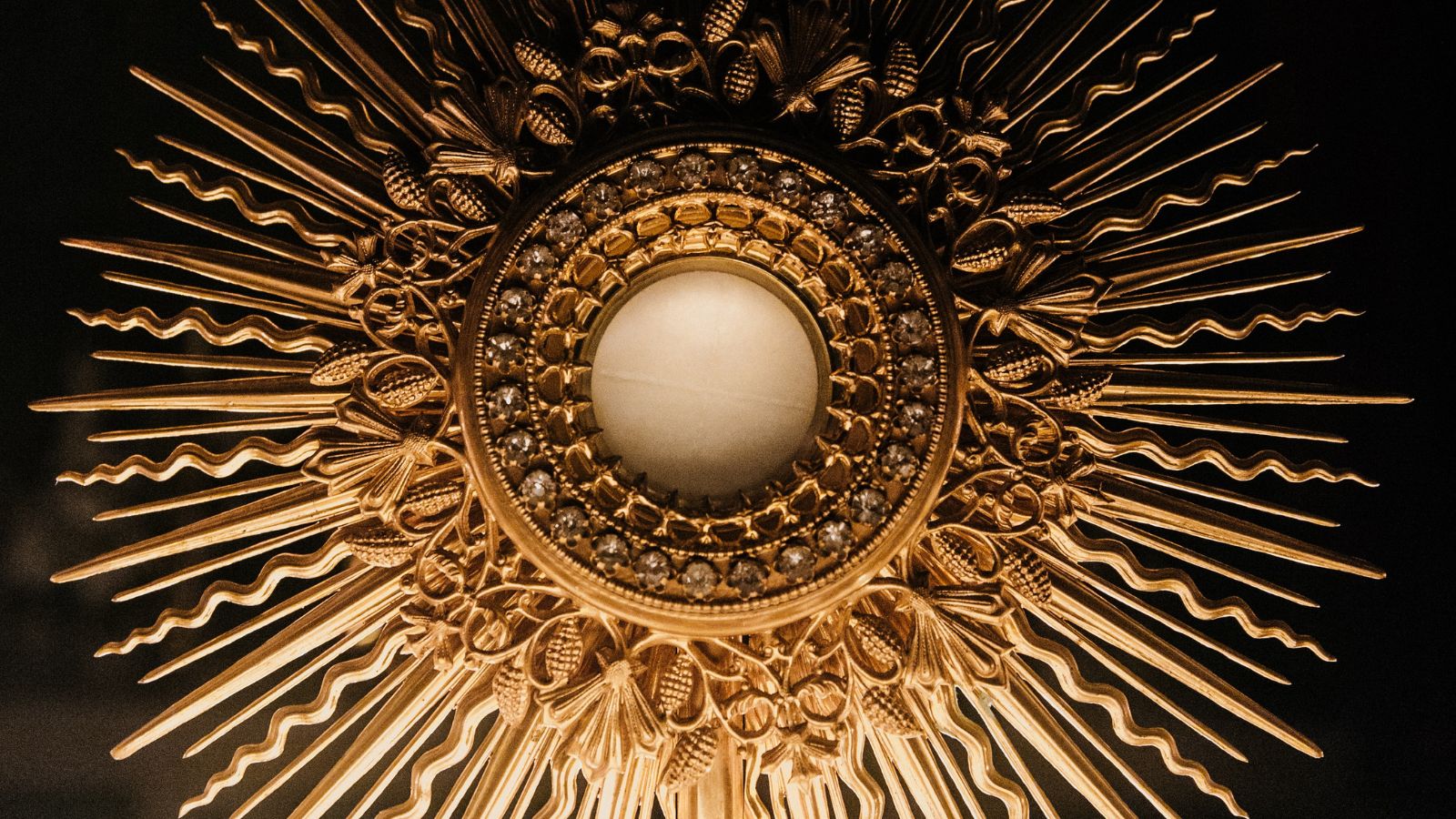
Eucharistic Adoration is when you spend time with Jesus in the Blessed Sacrament. During this time, you can pray in whatever way you want, bringing Jesus your needs, desires, fears, regrets, and more.
“The Church and the world have a great need of Eucharistic worship. Jesus waits for us in this sacrament of love. Let us be generous with our time in going to meet Him in adoration and in contemplation that is full of faith and ready to make reparation for the great faults and crimes of the world. May our adoration never cease"
- Pope St. John Paul II Dominicae Cenae, 1980
"Adoration of the Eucharist" is the contemplation and recognition of the real presence of Christ, in the sacred species, outside the celebration of Mass [...] It is a true encounter of dialogue thanks to which [...] we open ourselves to the experience of God [...]. It is likewise an act of solidarity with the needs and requirements of the whole world" (Basic Document of the Congress, n. 25). And this Eucharistic adoration, by its very spiritual dynamic, must spur us to the service of love and justice towards our brothers and sisters"
- Pope St. John Paul II Homily, Archdiocese of Sevil, Spain, 1993
“Through adoration, the Christian mysteriously contributes to the radical transformation of the world and to the sowing of the Gospel. Anyone who prays to the Savior draws the whole world with him and raises it to God. Those who stand before the Lord are therefore fulfilling an eminent service. They are presenting to Christ all those who do not know him or are far from him: they keep watch in his presence on their behalf."
- Pope St. John Paul II Letter To The Bishop Of Liege For The 750 th Anniversary Of The “Corpus Domini” Festival, 1996
What To Do
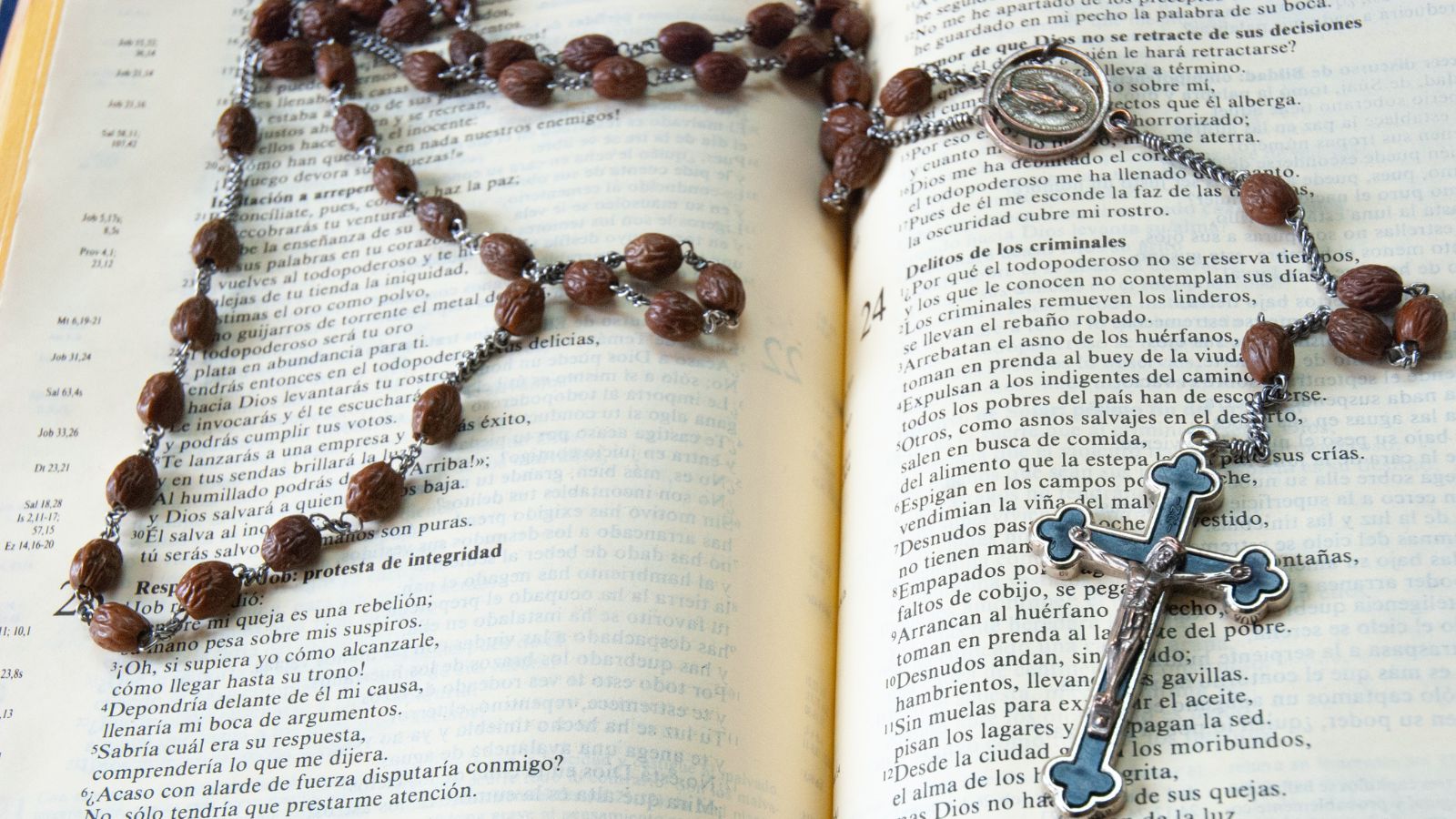
Talk with Jesus, pray the Rosary, write your reflections in a prayer journal, Lectio Divina read scripture, reflect on saint’s quotations regarding Adoration, and favorite prayers. Don’t forget to leave some time for silence so that Jesus can speak with you.
- Eucharistic Adoration: Keeping Company with the Lord: https://www.youtube.com/watch?v=kcl0PiAMJfo
- Beginner’s Guide to Eucharistic Adoration: https://bustedhalo.com/ministry-resources/a-beginners-guide-to-eucharistic-adoration
- How to Go to Adoration: https://catholic-link.org/how-to-go-to-adoration-eucharist/
Physical Elements of Adoration
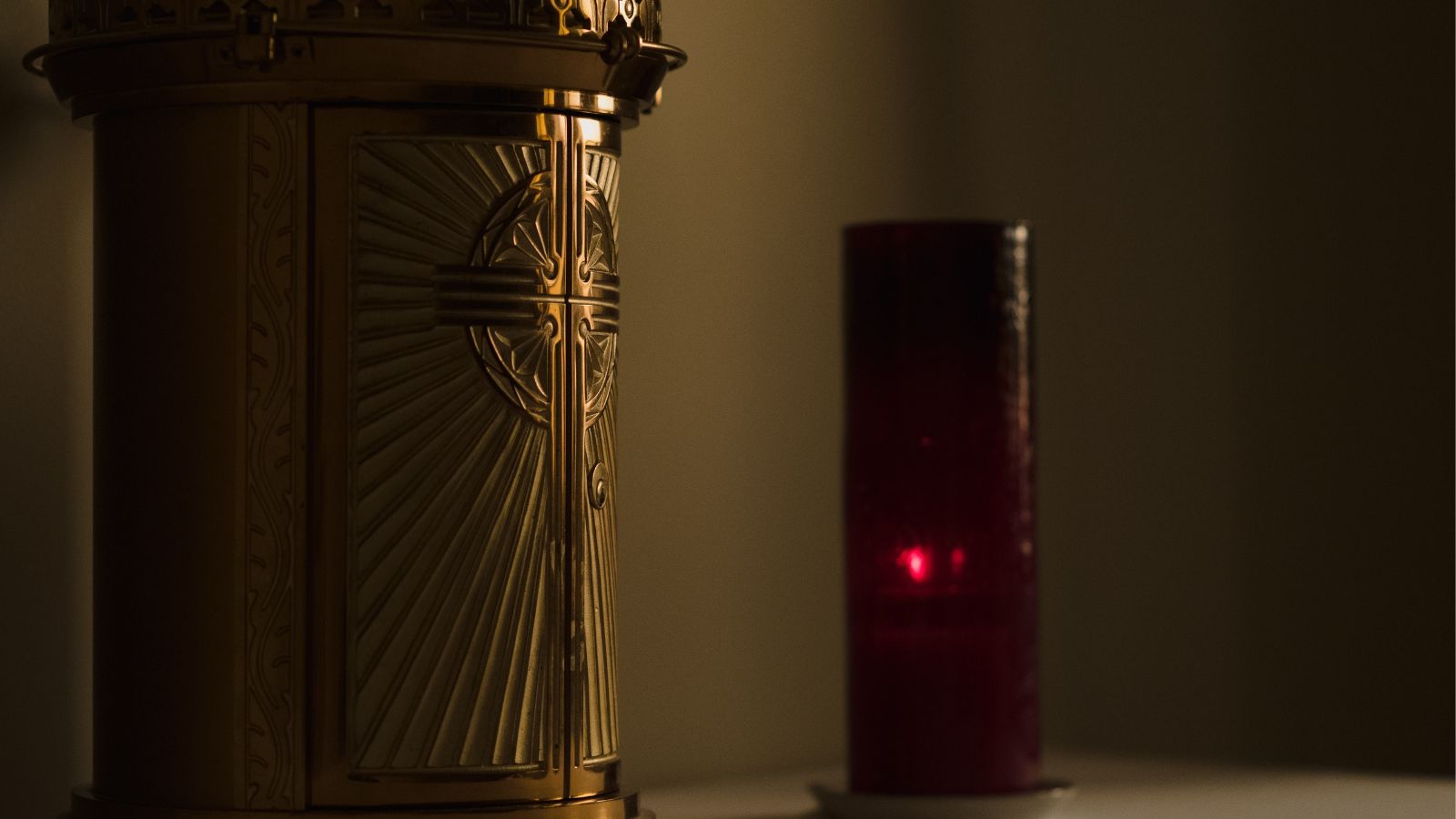
The tabernacle
The tabernacle is a locked, gold container located behind the Altar in which the parish priest stores the Holy Eucharist. A red, votive candle is lit to signify the Real Presence of Jesus Christ is in the tabernacle. The priest will open the tabernacle, dwelling place of the Lord, to retrieve the Holy Eucharist during Communion and Eucharistic Adoration.
The consecrated host
The consecrated host is a physical element that has been transformed into the actual body, blood, soul & divinity of Jesus Christ. This change of substance, or 'transubstantiation', takes place during the words of Consecration at Mass.
The monstrance
The monstrance is the gold item that exposes and displays the Holy Eucharist before those who come before it in Adoration. It can take various appearances, but one of the most common types of monstrance has a sunburst shape atop a long stem with a wider base to keep it secure. The monstrance also contains another part called the luna.
The luna
The luna, or lunette, is a glass compartment in which the priest places the Holy Eucharist during Eucharistic adoration. It is often at the center of the sunburst shape, displaying the glory of Christ’s presence within the Eucharist.